Mientjie Kleinhans

Training stress in dogs

For some dogs, training can be stressful and here are a few tips on when you should end a training session. There are some very obvious signals that your dog will display to indicate he is stressed when you are training him: His tail is tucked under his body. His ears are flat and slightly

Training stress in dogs Read More »

Q & A: Gingivitis in cats

Q: How do I know if my cat suffers from gingivitis? A: Gingivitis is inflammation of the gums, and it is reversible. It can only be cured with proper treatment, and is a common oral problem in cats. Symptoms can include the following: Bad breath Redness and swelling of the gums Yellow plaque on the

Q & A: Gingivitis in cats Read More »

Create a dog sniffari

Dogs can smell so much better than people can, and they use their olfactory sense to create images in their minds. Why not zone in on this sense and create a sniffing experience for your dog? There are so many ideas – all it takes is a bit of imagination. The sniffari is normally done

Create a dog sniffari Read More »

Puppy’s time spent with mom

Puppies should spend as much time as possible with their mom. There are five basic reasons for this: Six- to seven-week-old pups are simply not emotionally ready to cope with the world out there. It is a bit like sending a three-year-old child off to fend for themselves. A week or two may not seem

Puppy’s time spent with mom Read More »

Win movie tickets for Marmaduke

Competition time! We’re giving away 5 sets of four movie tickets to our readers to see the movie, Marmaduke, which opens on 27 May 2022 in cinemas. How to enter: send your name, contact number, email address and reason why you want to win these tickets to animaltalk@panorama.co.za before Wednesday, 25 May 2022. About the

Win movie tickets for Marmaduke Read More »

Bee facts for World Bee Day

Every year on 20 May, we celebrate World Bee Day. This year we want to celebrate bees by highlighting a few interesting facts. Did you know this about bees? In the hive there are three kinds of honeybees: the queen, the workers and the drones. The queen lays 600 to 800 eggs per day during

Bee facts for World Bee Day Read More »

House roaming chinchilla

Have you also wondered if it is safe for your chinchilla to play outside of his cage? Time out of the cage in a safe environment is good for your chinchilla, but remember that they are rodents and enjoy gnawing. All electrical cords should be removed or raised to prevent the chin from chewing through

House roaming chinchilla Read More »

Q & A: Lump on senior dog

Q: I noticed a lump on my older dog’s skin. What should I do? A: A large portion of cancers start as a skin lump. Most lumps on a dog’s skin are tumours. You get two types of tumours. A benign tumour is an overgrowth of non-harmful cells and can just be in the way,

Q & A: Lump on senior dog Read More »

Quality training for your dog

When you choose a trainer for your dog, you need to ensure that the trainer is reputable, and works for you and your dog. The best way to choose such a trainer, is to go and watch their classes before you enrol. Look for things like: What kind of equipment are the dogs wearing? Harnesses

Quality training for your dog Read More »

A few frog facts

Let’s see if you knew these facts about frogs. There are more than 5,000 frog species in the world The bullfrog got his name from the sound he makes – it sounds like a bull bellowing. The world’s smallest frog is about the size of a fly and is 7.7mm long. You can find the

A few frog facts Read More »

No claws, please!

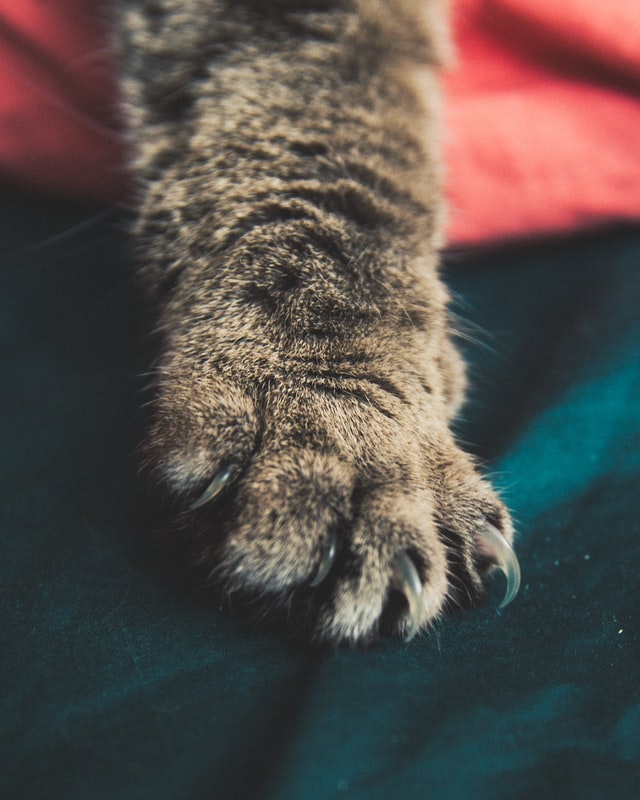
If your cat is using her claws to pull herself onto your lap, then a visit to your vet would be a good idea. Cats are normally very agile and should have no trouble at all jumping onto your lap, so you would need to find out if she has any injury. If your cat

No claws, please! Read More »

Q & A: Itching and cortisone

Q: My dog has itchy skin and I keep using cortisone to treat this. Is this acceptable? A: No, definitely not. Cortisone is good in that it will stop the itching, often immediately, but as soon as you stop the cortisone, the itching is back. Therefore, you are treating the symptoms and not the cause,

Q & A: Itching and cortisone Read More »